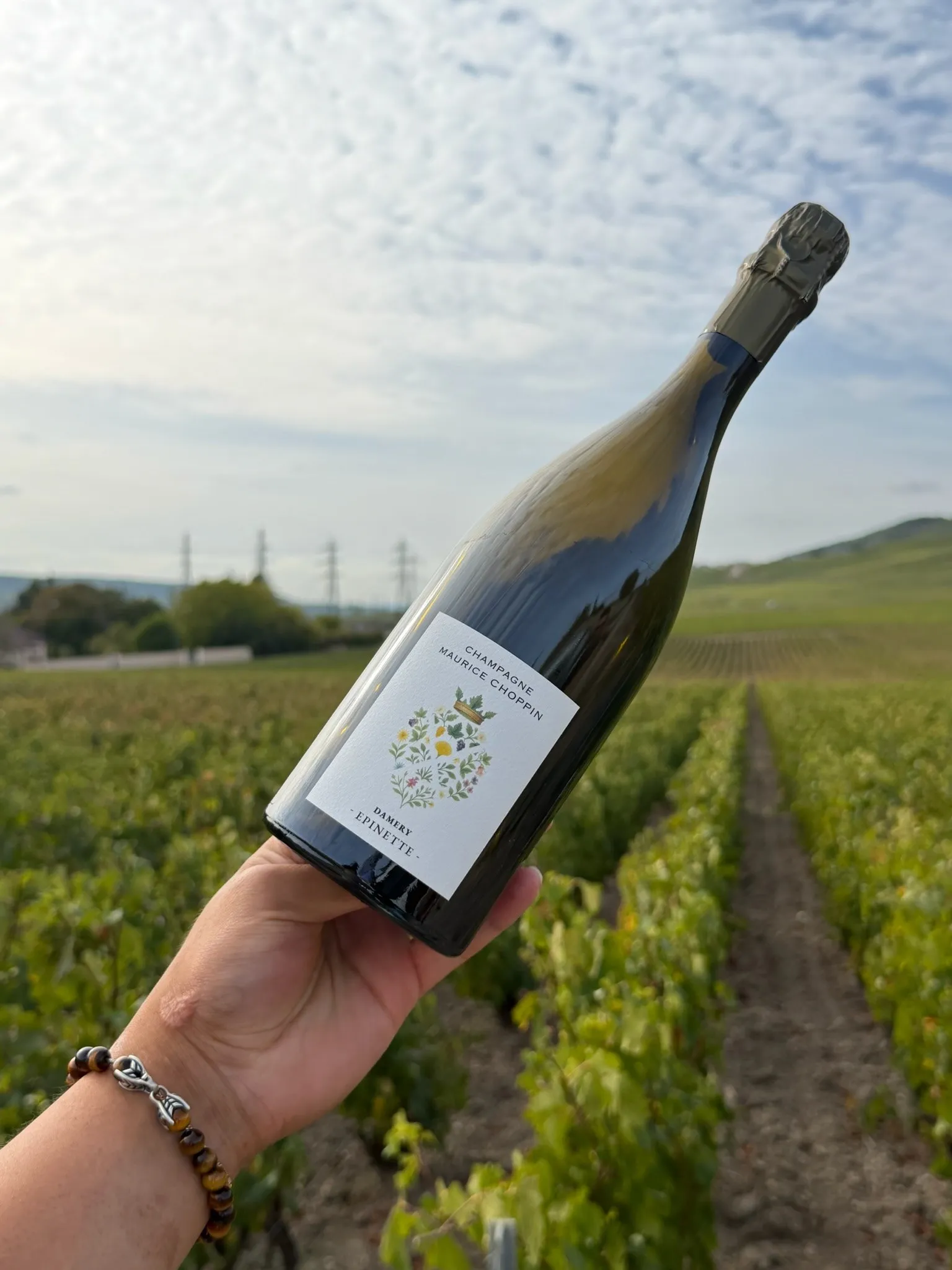
Epinette de Champagne 2021 · Magnum
100% ChardonnaySparkling0 g/L · Extra-Brut150 clHVENatural
Single-parcel blanc de blancs from Chardonnay planted in 1982 in Les Bas Russelets, the same vineyard as the Pinot Noir cuvée of that name. Five-hundred-litre oak, forty months on cork, no dosage.
Fermented in oak with indigenous yeasts, aged on the lees with spontaneous malolactic fermentation. Disgorgement liqueur made from the house’s own barrel-aged wines and cane sugar. No filtration, fining, cold stabilisation or chaptalisation.
- Country
- France
- Region
- Champagne
- Sub-region
- Vallée de la Marne
- Village
- Damery (autre cru)
- Lieu-dit
- Les Bas Russelets
- Planted
- 1982, massal selection
- Soil
- Calcareous
- Aspect
- South
- Viticulture
- Benjamin Choppin works every parcel himself, in the vines daily through the season, and harvests by hand, parcel by parcel, the way a Burgundian would. One rule governs the domaine: respect for the living. No herbicide or insecticide is used; the only composts are certified organic; and the plots are bordered by trees, meadows and flowering strips to keep the biodiversity around the vines. HVE-certified since 2018, farmed along organic lines without seeking certification.
- Vintage
- 2021
- Vessel
- 500 L oak barrels
- On the lees
- 40 months
- Dosage
- 0 g/L · Extra-Brut
- Sulfur
- Minimal — a small addition for stability in transit
- Filtration
- Unfiltered, unfined, no cold stabilisation
- Vinification
- Each parcel is pressed and vinified separately. Fermentation is spontaneous, on indigenous yeasts, in oak casks of 225 to 600 litres from the Tonnellerie de Champagne, followed by a spontaneous malolactic and a long élevage on the lees. Nothing is fined, filtered, cold-stabilised or chaptalised. The disgorgement liqueur is the house's own barrel-aged wine and cane sugar; dosage runs from zero to one gram, and sulfur is kept to a small addition for stability in transit.
- Case
- 3
2021 in Champagne
The hardest year in a generation: severe frost in early April, then a cool, wet summer with relentless mildew pressure and hail in places. The crop was the smallest in decades and some growers lost most of it. What survived was picked in mid-September at classic ripeness — wines of tension and line, closer to the Champagne of the 1990s than to the sunny years around it.
The 2021 · Magnum Epinette de Champagne
Notes to follow.
DomTheSomm note
Notes to follow.